
NOTE: See bottom of page for updated version and notes.

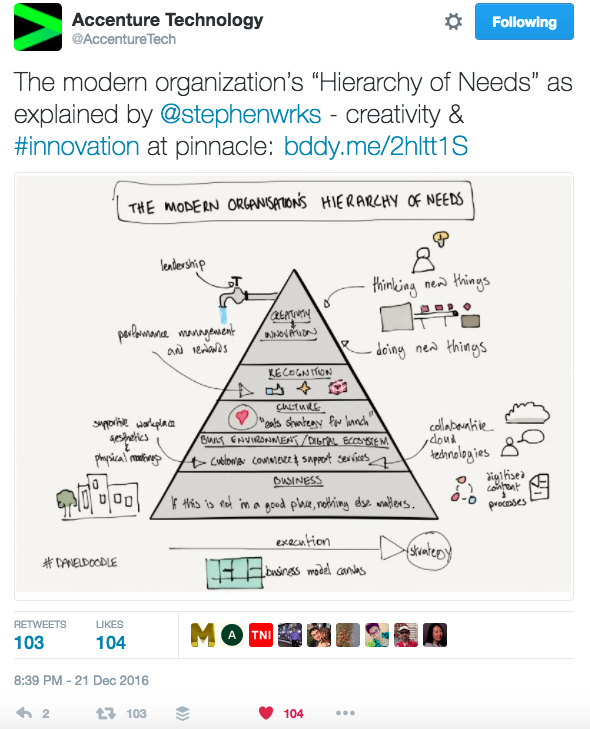
This doodle started out as a fun means of framing the way the world of work is moving within a very established framework – Maslow’s Hierarchy of Needs. Each element in the hierarchy kind of speaks for itself. I added a few lines of elaboration for each below. Over time this post has become the most read and shared of all the posts I have ever written (see screenshots below) so I think it has struck a cord.

Creativity and Innovation
I see this as the pinnacle of achievement. Everything else, as with the original framework, needs to be in place to get here but this is where the individual and organisation actualise. It’s the raison d’être of our existence in my view. If the organisation is not constantly innovating and creating new possibilities then it will not exist in the future. And as far as organisations are currently structured and will be for the foreseeable future, leaders are still the valve (represented by the tap) that allow this output or level of actualisation to flow, or not.
Recognition
This could be seen as an element of actualisation but as with the others below, it’s still only a means to an end. Money is a part of it as is peer recognition and rewards. But it’s not what gives us our kicks really and nor what really helps us grow. It does need to be managed however.
Culture
Culture is what makes us feel a sense of belonging and comfortable in the work environment we are in. It’s very necessary because if it’s not right the best work will not be produced. And if you believe that culture eats strategy for lunch then it’s right this sits higher up the hierarchy, at least in terms of it allowing for organisational actualisation.
Built environment and digital ecosystem
In work terms it’s where people get things done and this is increasingly happening in digital or virtual environments as systems of engagement allow us to connect and collaborate to achieve common goals. But that doesn’t mean the physical environment matters less. Nothing beats face to face interactions and the physical environment that’s geared to facilitating that best is still likely to feature prominently moving forward. It may even allow organisations to compete more effectively.
Business
This is where strategy (which includes a clear purpose) comes into the picture and execution. Essentially the organisations business model and how it is planning to deploy its distinctive capabilities around an ever changing technological, competitive and customer landscape. If you don’t know where you are going as an organisation, you’ll never reach (actualise) anything.
Update
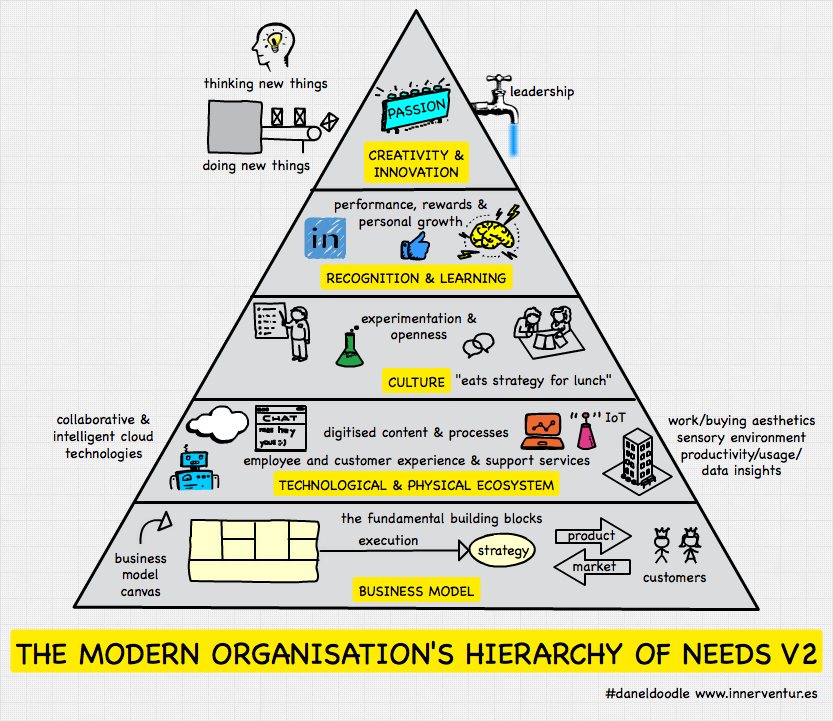
This is a version two of the hierarchy based on lots of feedback and subsequent thoughts I’ve had on the subject – here it is below. Notes on what and why I added what I did in this LinkedIn article.


 InnerVentures
Leave a reply to Behaviours of the post modern organisation | InnerVentures Cancel reply