
I was struck by two insights recently that impacted my views of web experience and its future. One was recent announcements on WordPress in its 21st year powering over 40% of the web which is considerable, so this is influential – see post by Matt Mullenweg, founding developer of WordPress. The other was seeing recent announcements by Microsoft on AI developments effecting web experience.
First what is web experience?
I’m partly (maybe even mostly) describing the experience a visitor has when interacting with a site, or user experience (UX). But it’s also more than that.
It’s about the open web which Matt Mullenweg talks about often and open standards and platforms, interoperability, control of personal data, etc.
It’s about the web staying open to all and not being controlled by a few, small but influential companies. So that anyone can have a presence and that they have total control of that presence.
Websites will still play a large role in that, for companies at least.
And while there is some debate about the continuing existence of websites (just do a search) in contrast to the use of social media and/or networking platforms or eCommerce platforms, I think there is always going to be a need for companies to have some kind of presence. Even if it is scaled back in favour of alternatives, I’m pretty confident they will continue to maintain a presence.
Things of beauty
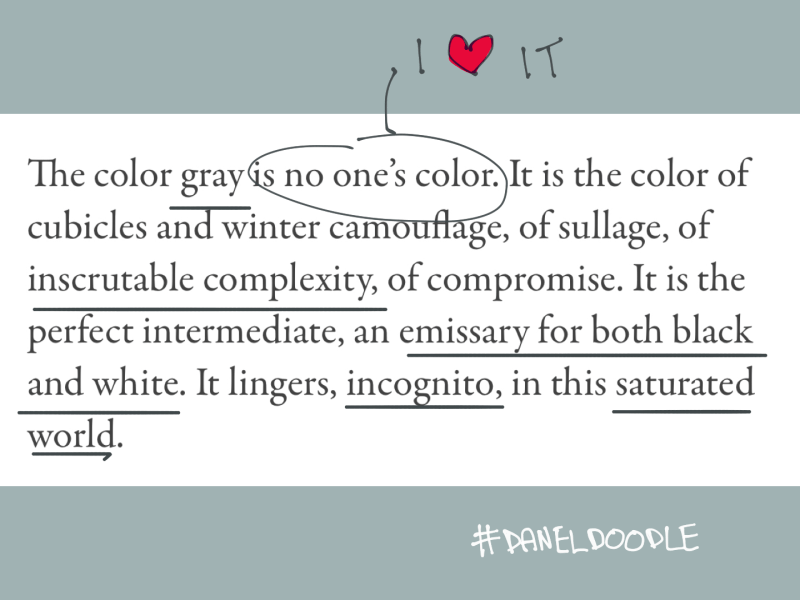
At the very least, websites still have the potential to convey and be a vehicle for things of beauty.
The latest WordPress build (6.6) is a testament not only to how it wants to keep things simple and open for its many millions of users but also to enable the building of things of beauty.
I think websites, if nothing else, should still be a place where you can derive aesthetic pleasure. Either through the UX or through the content displayed like beautiful imagery, videos or the written word.
Check out this beautifully simple website and post with gorgeous prose for evidence of that (the image is a small sample I superimposed some doodles on): The Paris Review – Ode to Gray.
Or check out My Modern Met which is actually built on WordPress, a gorgeous site with articles covering art, design, photography, architecture, etc.
Things of action
Websites showcasing things of beauty can be approached leaning back, you are consuming and enjoying the content. That’s different when you need to do something, take action, like shop for and buy something on a site, whether a website or a shopping site like Amazon. For that you need to lean in, metaphorically speaking.
The search symbol on websites is arguable the go to function for when you get lost or stuck after trying to take an action. It’s also the universal symbol of disappointment on many sites – it simply doesn’t work very well.
It may be the first thing you do anyway, think of your Amazon shopping habits.
Either way, scrolling through the search results is the very next thing you need to do in the hope of finding what you need.
Going from scroll based shopping to goal-based shopping with AI powered conversational websites is what was announced by Microsoft at Build 2024. Check the video out below for what I mean.
This for me makes a lot of sense and I think we are going to see a huge amount of this in future. Not that conversational websites are a new concept that hasn’t been attempted before. They have but now the AI technology behind them is far better.
Imagine just talking to the site and showing it things and getting what you want far more intuitively. Imagine no further.
This future of the web is very different, with a very different purpose, functionality and approach.
 InnerVentures
Leave a Reply