For most of business history, the sources of competitive advantage have been fairly stable: get there first, build something better, sell it cheaper, make it meaningfully different, or build a moat wide enough that competitors can’t cross it. Strategy courses have taught some version of this list for decades.
I’ve been wondering how these stand up in the AI age. Being in the business of selling and supporting AI solutions (disclosure), I am often confronted with competing solutions and it really is challenging to determine where advantage lies at this early stage. I’ve dived into the main sources below.
NOTE: I used Anthropic’s Claude to brainstorm and sense make around the main topics I put to it and some key assumptions I was making. The result after a lot of back and forth has also been further worked on by me. I also use WordPress’ native integration with Claude which make’s it easy to create a post once I am happy with a first draft I can carry on working on in WordPress.
1. First: first-mover advantage isn’t what it used to be
ChatGPT defined a category in November 2022 and, on raw scale, still leads it — north of a billion monthly users and something like half of global AI assistant traffic, depending on whose tracker you trust. But look at where the money and the frontier workflows are moving, and the picture gets more interesting. By spring 2026, Anthropic’s annualized revenue had passed OpenAI’s — roughly $47 billion against $25 billion — and Anthropic had built something like a 54% share of the enterprise coding market.
That’s not “the first mover lost.” It’s something more precise: first-mover advantage held in the category ChatGPT defined (mainstream consumer chat) and eroded in the categories that emerged after it (agentic and technical workflows, enterprise trust, revenue quality). The advantage didn’t vanish — it relocated to a challenger with a sharper story for a specific, high-value segment, where the money arguably is. And some would argue Anthropic is not just taking the money but the mindshare too.
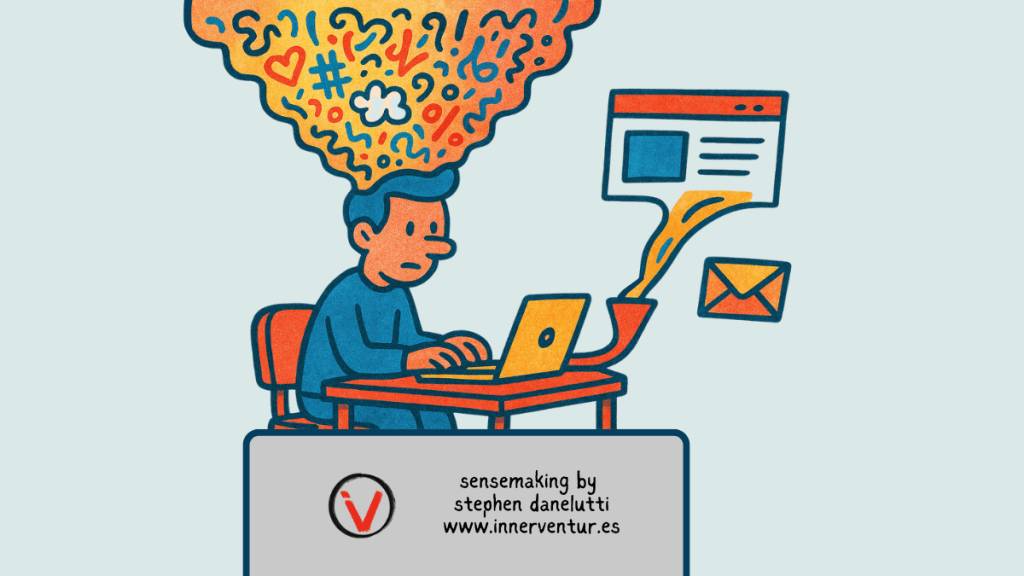
Is this just happening in AI? No. We have apparently entered post-processable velocity — a speed of change exceeding the ability of any individual, company, market or government to fully absorb, understand and respond to it in real time. This affects everyone and if you are first at anything, don’t bank on being in that position for too long.
2. Better: a shrinking half-life
“Better” is the most intuitive form of advantage, and in this market, the shortest-lived. Every few months a new release resets the leaderboard, and a growing share of the benchmarks used to make that case are already saturated or partially gamed. If a competitive story rests on “our model scores higher,” it needs rewriting on the same cadence as the leaderboard.
But this assumes the game is only about models. The more durable version of “better” is narrower: not smartest model overall, but best for a specific job. And how open are the models, and what is offered in addition to the models, e.g. the harness (the software scaffolding and infrastructure that wraps around an AI model). A meaningfully different claim of better should be judged by task completion and reliability in a real workflow rather than a model benchmark. What gets the job done better in other words and at the lowest cost. Onto the next very much related point.
3. Cheaper: the cost paradox
Per-token prices have collapsed. GPT-4-level capability that cost roughly $20 per million tokens in 2022 runs closer to $0.40 today — a decline researchers have measured at something like 10x a year, though that pace is expected to slow to a still-substantial 3–5x annually over the next couple of years. If “cheaper” were a durable advantage on its own, this alone should settle the question.
Except most organizations’ total AI spend is rising, not falling. The reason is usage, not price: agentic workflows — where a model reasons iteratively, calls tools, and checks its own output — consume something like 5 to 30 times more tokens per task than a simple chatbot query, per Gartner’s 2026 analysis. Falling unit costs and rising total bills are happening at the same time, inside the same companies.
That paradox matters for the argument here: cheaper tokens are becoming table stakes, not a competitive advantage, because the whole industry is getting cheaper together, at a similar rate, using similar techniques. The lever that actually differentiates companies now is cost per completed outcome — how well an organization routes, caches, and orchestrates around the raw token price — which starts to blur into a moat rather than stand alone as a strategy. This ties in completely with the previous point.
4. Different: more axes than consumer vs. enterprise
The clearest initial example is the consumer/enterprise split — OpenAI building the default mass-market assistant while Anthropic concentrated on developer and enterprise workflows. Microsoft, Amazon and Google all have their feet in both camps to varying degrees. And then there is an explosion of other startups. Differentiation is playing out on several other axes at once:
- By vertical. Harvey (legal), Abridge (clinical documentation), Cursor (software development) — betting that depth in one workflow beats breadth across many.
- By modality. Midjourney, ElevenLabs, and Suno have carved out defensible ground entirely outside text.
- By openness. Open-weight players — Llama, Mistral, DeepSeek, Qwen — compete on control and self-hosting rather than raw capability.
- By trust posture. Safety-first positioning is itself a differentiator for risk-sensitive buyers, distinct from a pure capability claim.
- By where it runs. On-device AI (Apple Intelligence, Gemini Nano) differentiates on privacy and latency rather than model size.
The catch with differentiation as a strategy: it’s usually the easiest of the five to copy. Building a vertical wrapper on top of an existing foundation model is a much lower bar than building the foundation model itself, so a wave of “same idea, different vendor” almost always follows a successful differentiation play within a year or two.
5. Moat: the one that’s actually durable
If the first four determinants all decay unusually fast in this market, the interesting question is: what doesn’t? A few categories of moat look genuinely durable, because they’re not really about the model at all — they’re about accumulated organizational, contractual, or behavioral commitments that don’t reset every time a better model ships.
Distribution and ecosystem lock-in. The advantage here isn’t model quality — it’s that hundreds of millions of people already open these products every day. Microsoft folding Copilot into an entrenched Office and Windows install base, or Google building Gemini into Search, Workspace, and Android, means the AI reaches users by default rather than requiring a new download, sign-up, or habit change. Microsoft’s approach is worth a closer look here — it isn’t just distribution, it’s distribution plus a service layer (model choice inside Copilot, plus consulting and change-management support) that helps an already-captive customer base actually adopt the technology, which starts to blend distribution with the organizational-absorption point below. Palantir sits in a similar place from a different angle: decades of deep, forward-deployed integration into a customer’s data and operations create a switching cost that has very little to do with which model is doing the reasoning underneath.
Workflow depth in a specific vertical. This is differentiation’s more defensible sibling. A vertical player doesn’t just target legal or healthcare — it embeds so deeply into the exact shape of that job, including edge cases, compliance requirements, and existing tool integrations, that switching means relearning a practice, not swapping a chatbot. The deeper that integration goes, the harder it is for even a technically superior general-purpose competitor to win on convenience alone.
Trust and brand for a specific use case. For regulated or high-stakes buyers, the deciding factor is often not which model benchmarks highest but which vendor a compliance officer or risk committee will actually approve. That approval — built from security certifications, audit history, and a track record of predictable behavior — becomes its own switching cost, since re-litigating it with a new vendor means restarting a diligence process that can take months. Brand-as-trust builds slower than brand-as-buzz, but it’s far stickier once it exists.
The outlier you cannot easily plan for
Organizational absorption capacity. This isn’t about what a vendor builds and more about what a customer can actually do with it — and it probably matters more than anything else. The gating factor for AI value is rarely whether the capability exists; it’s whether an organization can use AI to change how work actually gets done: retraining processes, adjusting roles and incentives, and building the internal muscle to keep re-configuring workflows as the tools improve.
A company that already has this absorption capacity captures value from every subsequent innovation that comes out from vendors almost automatically. A company without it can buy the exact same tools and see nothing change. Organizational absorption capacity functions like infrastructure: invisible, slow to build, and the real rate-limiter on whether any success is achieved.
In conclusion, if you are a vendor, choose your customers well and plan for success by focusing on business outcomes and proving value.


Leave a Reply