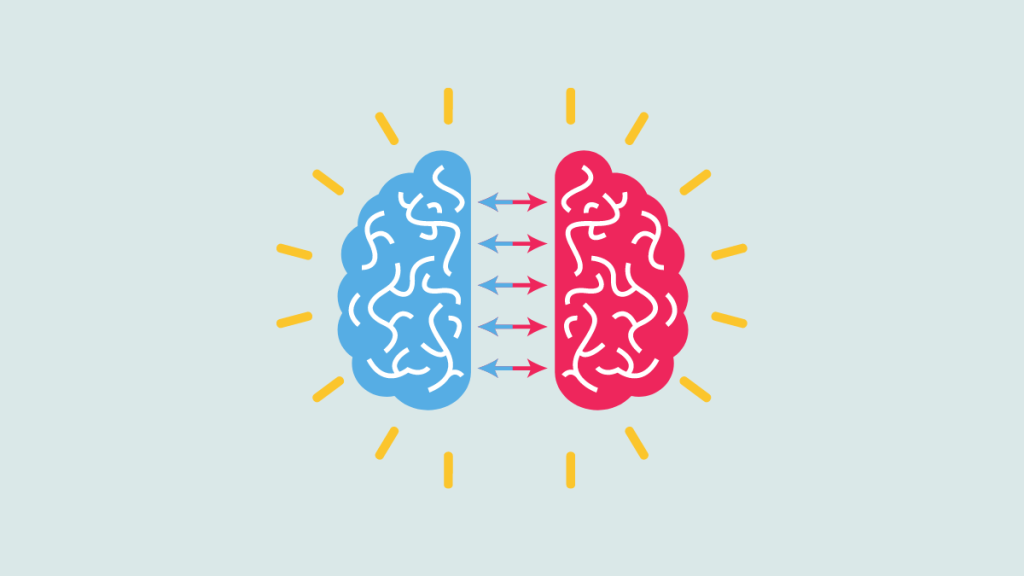
I mean a few things with this title. One is the classic reference to address the left and right brain side of activities with adoption, i.e. the human, emotional side vs the rational, business, technological side. But I also mean you can’t just address adoption in parts – you have to get everyone engaged, companywide, top to bottom.
Below in a simple diagram, by way of illustration, I’ve tried to capture just some of the major stakeholders and parts of a business that need to be involved when it comes to technology adoption or any kind. Adopting AI is no different. And as I highlighted in a recent post, there are many other factors to think about: The role of Systems Culture and Strategy for AI adoption. Note this diagram is not fully representative and nor did I map functions or activities exactly, i.e. the fact the frontal lobe which corresponds with decision making in the brain and is mapped to executives, is purely coincidental.

I make all these points based on my observations in the work that I do. What I often see is a piecemeal approach to adoption activities. They are not carried out holistically.
I see this with colleagues and customers I work with, and I am not immune to sometimes being too narrow and focused. The problem is often that the focus is on point solutions, set pieces that don’t take the whole into account. In the article I linked to above, it’s like having a plan but not a strategy, where you are just ticking the box on a set of disparate activities that are not aligned to an overarching vision and outcome that everyone is behind.
I think the temptation is always there to do a small piece of work and then give up too easily or too soon thinking you are done. We tend to be greedy for results, overeager to arrive at our desired destination. It helps to remind ourselves that the means are the ends; the journey, the destination. Success comes to those who ignore setbacks, refuse to give up and persist with the ever-evolving task of change and innovation.
Below is a list of recent articles that I am collecting as part of work on my new trend report in which technology adoption features heavily and they highlight some of the many challenges with AI technology adoption.
Latest articles highlighting AI adoption status
Amazon, Google Quietly Tamp Down Generative AI Expectations
Posted on March 12. May be behind a paywall. In the past year, major technology firms have championed generative artificial intelligence as the next big thing, boosting the stock market to new highs. But behind the scenes, representatives of major cloud providers and other firms that sell the technology are tempering expectations with their salespeople …
Less than half of European businesses help employees learn AI, finds LinkedIn
Posted on March 10. A new report states that skills needed for jobs are going to change by 51% by 2030 and the rise of Generative AI is further accelerating this …
Executives are spending on AI—but just 38% are actually training their workers on it
Posted on March 6. Workers from the entry level to to the C-suite are prioritizing the adoption of artificial intelligence at work, but leaders don’t seem to be …
AI is the talk of the town, but businesses are still not ready for it, survey shows
Posted on March 6. Generative AI adoption rate for businesses is yet to match the hype around the technology, with data privacy, regulation, and IT infrastructure …
Early adopters’ fast-tracking gen AI into production, according to new report
Posted on February 21. Organizations are fast-tracking generative AI pilots into production, anticipating the rewards of greater efficiency, improved personalization and customer experiences and more informed decision-making. One in four organizations say gen AI is critically important to gaining increased productivity …
Businesses are losing millions because their employees can’t use technology right
Posted on February 8. New research has claimed extremely inefficient adoption of technology in the workplace could be costing businesses millions and lead to major inefficiencies in the office …
 InnerVentures
Leave a Reply