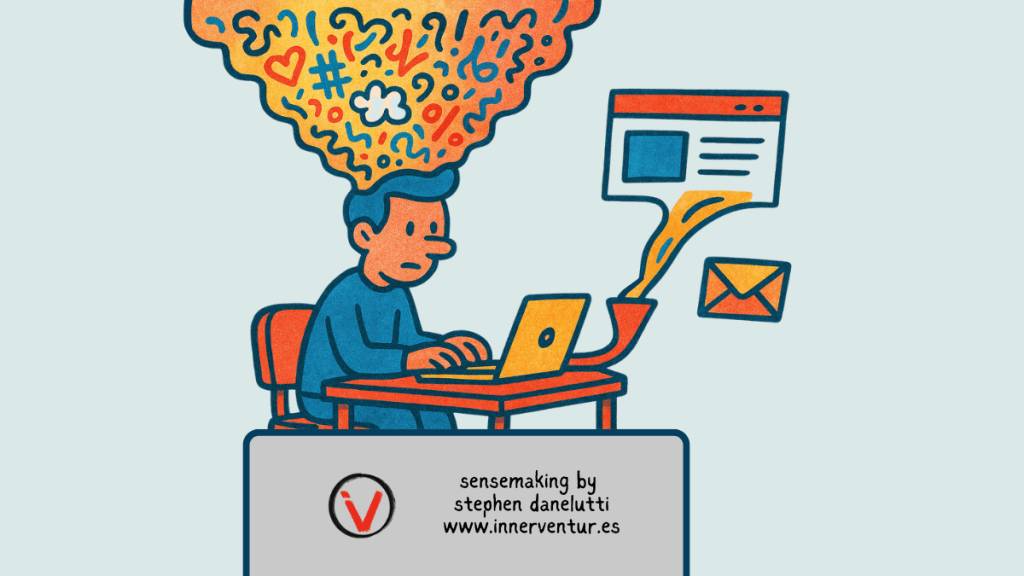
If AI automates most white‑collar tasks within 12–18 months, what will humans actually do. And how do we prepare now? Recent remarks by Microsoft AI CEO Mustafa Suleyman suggest AI will reach human‑level performance on most professional tasks within that window, with autonomous agents coordinating many enterprise workflows over the following 2–3 years.
You either believe these are urgent themes as humans are seemingly being squeezed out of work and we need to plan for relevance, innovation and change. Or it is all overblown and there is nothing to worry about – business can continue as usual. Assuming you are in the former camp, I’ve put some thoughts together.
Why skills must change: When AI handles most routine and even complex cognitive tasks, the human premium moves from execution to direction, oversight, and judgment. Software engineering offers an early preview: many engineers now rely on AI for the vast majority of code production, reshaping their role from primary producers to reviewers, prompt designers, and integrators.
Who’s most exposed: Economists and think‑tanks warn that higher‑education, higher‑pay roles – heavy on cognition – are among the most exposed to AI substitution, not just lower‑skill work. This flips a long‑held assumption about automation risk and underscores the need for rapid upskilling.
According to Suleyman, “I think that we’re going to have a human-level performance on most, if not all, professional tasks,” he said. “So white collar work, where you’re sitting down at a computer, either being a lawyer or an accountant or a project manager or a marketing person, most of those tasks will be fully automated by an AI within the next 12 to 18 months.”
In the next phase, in 2-3 years, Suleyman argues that autonomous agents will plan, call tools, transact, and hand off work to other agents with minimal supervision—coordinating end‑to‑end workflows in legal, finance, marketing, HR, and operations.
In the face of all this …
The new human stack
- Specifying intent and defining outcomes and measures: Translating business strategy into precise system objectives, policies, and constraints for agents to pursue. Deciding what matters and designing metrics that evaluate the business outcomes and human impact.
- Shaping innovation and change: Ideation (with help from AI), experimentation and data driven insights that lead to the right, new and differentiated business outcomes and change required. Anticipating role redesign, incentives, and workforce well‑being. Communicating purpose, building stakeholder alignment, and stewarding culture as work identities shift. Creating playbooks for action.
- Adjudicating ambiguity and sense making: Exercising judgment under uncertainty, especially on ethical, legal, reputational or cross‑domain trade-offs. Questioning and validating everything and whether the innovation and change are fit for business and human impact.
- Governing trust and systems: Designing and enforcing guardrails, audits, and escalation paths for safety and compliance. Designing systems and understanding how everything interconnects and the behaviours those connections create – going beyond the prompt layer. Resolving conflicts and anomalies between agents and humans and intervening on edge cases.
 InnerVentures
Leave a Reply